
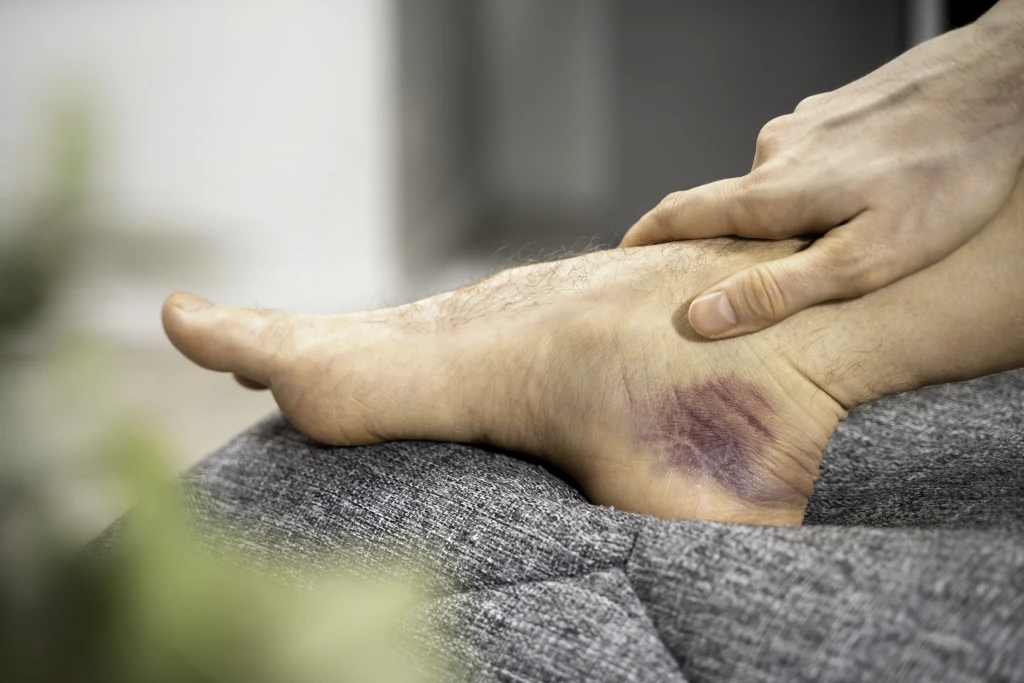
An ankle can feel sore after an awkward step, unfamiliar exercise, increased walking, or a minor strain. Complete inactivity is not always the answer. Once serious injury has been ruled out and movement is tolerable, gentle activity may help maintain comfortable motion while the irritated area settles.
The key is matching movement to what the ankle can currently handle rather than forcing it through pain.
Why Gentle Movement May Be Useful
The ankle depends on coordinated movement from muscles, tendons, ligaments, and the joint itself. After a minor irritation, avoiding all movement for too long can leave the area feeling stiff when normal activity resumes.
Gentle ankle motion or comfortable walking may be reasonable when symptoms are mild. MedlinePlus notes that ankle problems can involve ligaments, tendons, cartilage, and bones, so the cause matters before deciding how active to be.
Let Comfort Set the Limit
Easy movement should not produce sharp pain or make swelling noticeably worse. A shorter walk, simple ankle circles, or carefully shifting weight from one foot to the other may be better starting points than jumping directly back into strenuous exercise.
Build Activity Back Gradually
Returning to normal activity works better when the increase is progressive. Instead of testing the ankle with a long workout, try a manageable amount and notice how it responds later that day.
People searching through general wellness reading may encounter many recovery approaches online. Those ideas are best treated as general information rather than substitutes for evaluating an injured or persistently painful ankle.
| Ankle Response | Possible Approach | What to Watch |
|---|---|---|
| Mild stiffness | Gentle movement | Increasing pain |
| Light soreness | Short activity | New swelling |
| Improving comfort | Gradual increase | Ankle giving way |
| Sharp pain | Stop activity | Difficulty bearing weight |
Support the Ankle Between Activities
Recovery does not depend on exercise alone. Comfortable footwear, avoiding uneven surfaces, and reducing activities that repeatedly provoke symptoms can make normal movement easier.
General everyday recovery articles can help people think about broader self-care habits, but specific ankle injuries may need individualized guidance. A sprain, tendon problem, fracture, and arthritis-related pain can feel similar at first while requiring different management.
Strength Matters After Symptoms Improve
An ankle that feels less painful may still be weaker than before. MedlinePlus explains that strengthening, range-of-motion, balance, and agility work can form part of recovery after ankle injury when a health professional considers it appropriate.
Pay Attention to the Pattern
Soreness caused by increased walking may behave differently from pain after suddenly rolling the ankle. Think about what happened before the discomfort started, whether swelling developed, and whether the ankle feels stable.
While reading broader care resources, keep that context in mind. Online descriptions cannot determine whether soreness comes from a mild overload, ligament injury, tendon irritation, fracture, or another problem.
What People Often Get Wrong
A common mistake is assuming that every sore ankle needs either total rest or aggressive stretching. Neither extreme fits every situation.
Minor discomfort may tolerate controlled movement, while significant injuries may need protection and assessment. Pain is also not a reliable measure of tissue damage by itself. How the injury occurred, the ability to bear weight, swelling, bruising, stability, and symptom progression all add useful context.
When Should You Get Medical Help?
Seek medical evaluation when ankle pain is severe, you cannot comfortably bear weight, significant swelling or deformity develops, or symptoms follow a substantial injury. Persistent pain, repeated instability, numbness, or an ankle that is not improving also deserves attention.
MedlinePlus advises contacting a health professional when walking is very painful or ankle symptoms fail to improve as expected after an injury.
Frequently Asked Questions
Is walking good for a sore ankle?
Light walking may be reasonable for mild soreness when you can bear weight comfortably and symptoms do not worsen. After an injury, however, the appropriate amount of weight-bearing depends on what was damaged.
Should I stretch a painful ankle?
Gentle mobility may feel helpful, but aggressive stretching can irritate an injured area. Stop if stretching produces sharp pain, instability, or worsening discomfort.
Why does my ankle hurt without an obvious injury?
Overuse, footwear, tendon irritation, joint problems, altered walking mechanics, and several other conditions can cause ankle discomfort without one memorable injury. Persistent unexplained pain should be assessed.
Return to Activity in Small Steps
Treat improvement as permission to progress gradually, not as a signal to immediately test the ankle at full intensity. Comfortable movement, sensible activity changes, and attention to how symptoms respond can support a smoother return to everyday activity.
If soreness keeps returning, worsens, or interferes with walking, getting the cause evaluated is more useful than repeatedly working through it.
This article is for general informational purposes and is not a substitute for professional medical advice, diagnosis, or treatment.