
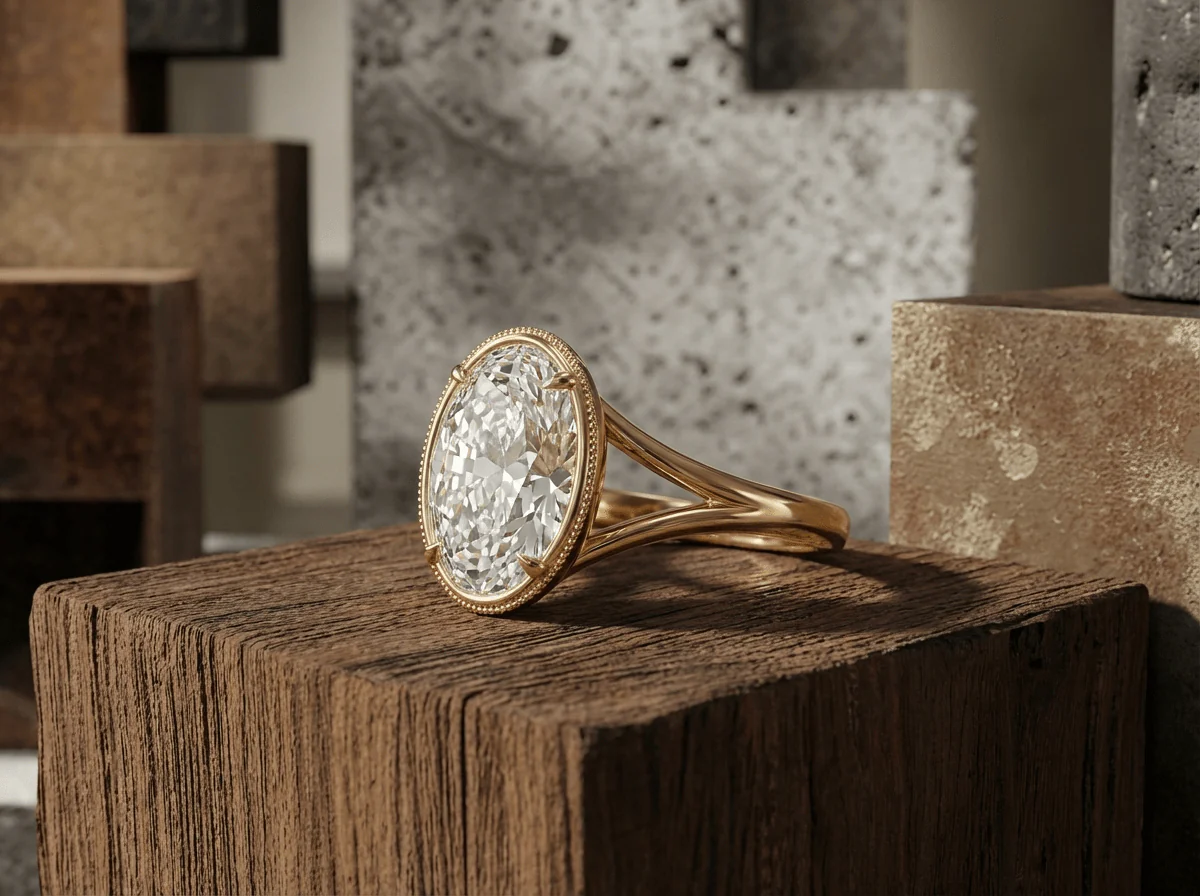
An oval lab-grown diamond can appear bright and balanced, elegantly elongated or noticeably broader—even when two stones share the same carat weight and quality grades. The difference often lies in the cut.
Unlike round brilliant diamonds, oval diamonds do not have a universally standardised cut grade. Their appearance is shaped by a more nuanced combination of length-to-width ratio, facet alignment, depth and light performance. This is why viewing a carefully selected range of oval cut diamonds by Lily Arkwright can be more useful than comparing certificates alone. The numbers provide important guidance, but the stone’s personality is ultimately revealed by how those proportions work together.
Length-to-Width Ratio Defines the Silhouette
One of the first characteristics people notice is whether an oval diamond looks slender or softly rounded. This is largely determined by its length-to-width ratio, calculated by dividing the stone’s length by its width.
A lower ratio produces a broader, fuller oval, which can feel classic and substantial. A higher ratio creates a longer, narrower silhouette with a more dramatic appearance. Elongated stones may also make the finger look more slender, particularly in solitaire and delicate shoulder-set designs.
Neither proportion is inherently better. Someone who prefers understated elegance may favour a balanced, medium-length oval, while a wearer drawn to contemporary statement jewellery may choose a more elongated shape. The setting matters too: a broad oval can complement a halo beautifully, whereas a slim stone often looks especially refined on a simple band.
Facet Arrangement Influences Brilliance
The outline creates the diamond’s profile, but its facets determine how effectively it handles light. Well-proportioned facets reflect light back through the top of the stone, producing brightness, contrast and flashes of colour.
Small differences in facet placement can make one oval appear crisp and lively while another looks softer or less energetic. Excessive depth may hide weight beneath the setting, meaning the diamond appears smaller from above than its carat weight suggests. A stone that is too shallow, meanwhile, may allow light to escape rather than returning it to the eye.
This explains why a beautifully cut one-carat oval can sometimes look more impressive than a poorly proportioned diamond of a higher weight. Visual presence is not simply a question of choosing the largest carat figure; it depends on how efficiently the diamond uses its dimensions.
The Bow-Tie Effect Changes the Stone’s Character
Many oval diamonds display a darker area across their centre known as the bow-tie effect. It occurs because of the way light travels through the elongated facet structure.
A subtle bow tie can add attractive contrast and dimension. If it is particularly dark or dominant, however, it may interrupt the diamond’s sparkle and make the centre appear shadowed. The effect cannot be judged reliably from a grading report because it is visual rather than represented by a single certificate measurement.
Lighting conditions also make a difference. An oval may look exceptionally bright under showroom spotlights yet reveal stronger central shadowing in natural daylight. Viewing imagery from several angles—or examining the ring in person—offers a more realistic understanding of how the stone will perform in everyday settings.
Cut and Setting Should Work Together
An oval diamond should not be assessed in isolation. Its proportions need to complement the engagement ring design surrounding it.
Solitaire settings place the greatest emphasis on the centre stone, making symmetry and facet performance particularly important. Halos can increase visual spread and soften the outline of a broader oval. Hidden halos add detail from the side without altering the face-up shape, while pavé shoulders intensify sparkle around a clean, elongated centre.
Prong placement also affects perception. Properly positioned claws should secure the diamond without making its outline appear uneven or visually shortening its tips. The most successful designs treat the diamond and setting as a single composition rather than two separate choices.
Final Thought
The appeal of an oval lab-grown diamond lies in its individuality. Carat, colour and clarity remain valuable measures, but they cannot fully describe whether a stone will look graceful, brilliant or beautifully balanced.
Paying attention to silhouette, visible spread, facet performance and bow-tie intensity leads to a more confident choice. Ultimately, the finest oval is not simply the one with the most impressive certificate. It is the diamond whose cut creates the character, sparkle and proportions that feel right on the hand.