
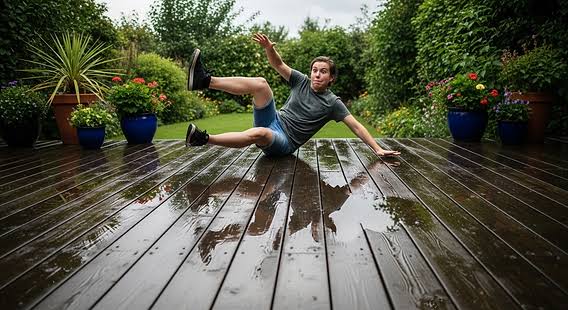
A deck that feels secure when dry can become surprisingly slick after rain, morning dew, or repeated damp weather. Slippery deck boards usually develop when moisture combines with dirt, algae, moss, worn finishes, or smooth surfaces. Improving traction starts with identifying what is making the boards slippery rather than immediately covering the problem with another coating.
Regular cleaning, better drainage, and the right surface treatment can make a major difference without changing the character of the deck.
Why Deck Boards Become Slippery
Outdoor boards collect fine dirt, pollen, leaf residue, and organic material throughout the year. Moisture can turn that layer into a thin slippery film, particularly on shaded sections where boards dry slowly.
Homeowners researching outdoor maintenance may encounter practical household ideas while comparing cleaning routines, surface treatments, and seasonal upkeep. The main goal on a deck is to remove contamination without damaging the timber or composite surface.
Shade Can Make the Problem Worse
Boards beneath trees, roof overhangs, furniture, or north-facing areas may remain damp longer than exposed sections. These areas are more likely to support algae and moss.
Moving planters occasionally and trimming excessive vegetation can help sunlight and airflow reach problem areas.
Start With Thorough Surface Cleaning
Sweep away leaves and loose debris before washing the deck. Pay attention to grooves, board joints, and areas beside railings because organic material often collects there.
General home improvement inspiration can be useful when planning maintenance, but deck cleaning products should always be selected for the actual board material. A cleaner suitable for composite decking may not be the right choice for untreated wood.
Use gentle scrubbing before reaching for aggressive pressure washing. Excessive pressure can raise wood grain, scar softer timber, or leave streaks.
Choose Traction Improvements Carefully
Some deck finishes contain fine anti-slip particles that create extra surface texture. These can improve grip when properly applied, although they don’t compensate for poor cleaning or standing water.
For homeowners comparing finishes and decorative surfaces, broader exterior design references may help with appearance decisions. Safety, compatibility, and manufacturer instructions should come before color or sheen.
| Deck Issue | Likely Cause | Useful Response |
|---|---|---|
| Green slippery film | Algae or organic growth | Clean and improve drying |
| Slick sealed boards | Smooth worn coating | Consider compatible anti-slip finish |
| Water sitting on boards | Drainage or installation issue | Correct water flow |
| Slippery shaded area | Persistent dampness | Increase airflow and sunlight |
Improve Drainage Around the Deck
A deck should shed water rather than hold it. Check whether dirt has blocked drainage gaps between boards and whether nearby gutters discharge water onto the deck.
Furniture and outdoor rugs can also trap moisture underneath. Raising furniture slightly or moving rugs during prolonged wet periods gives the surface time to dry.
Small maintenance changes often work better than adding permanent abrasive strips across an otherwise healthy deck.
Mistakes That Can Make Slipperiness Worse
One common mistake is applying a fresh coating directly over dirty boards. The new finish may hide discoloration temporarily while trapping contamination underneath, and adhesion can suffer.
Another problem is overusing a pressure washer. A damaged, roughened board may absorb moisture faster later. Strong household chemicals can also discolor decking or harm nearby plants. Start with the least aggressive method that can remove the buildup.
Frequently Asked Questions
Does pressure washing stop decking from becoming slippery?
Pressure washing can remove dirt and organic growth, but excessive pressure may damage wood. Cleaning should be combined with better drying, drainage, and suitable surface maintenance.
Are anti-slip deck coatings worth using?
They can improve traction on compatible surfaces, particularly in consistently damp areas. The deck still needs to be clean, structurally sound, and properly prepared before coating.
Why is only one part of my deck slippery?
Localized shade, dripping gutters, nearby plants, furniture, or poor drainage may keep that section wetter than the rest of the deck.
Keep the Surface Clean and Dry
Better traction usually comes from consistent maintenance rather than a single dramatic repair. Clean away organic buildup, correct places where water collects, and use a compatible anti-slip treatment if additional grip is needed. Recheck the deck after wet weather so small slippery areas can be addressed before they spread.